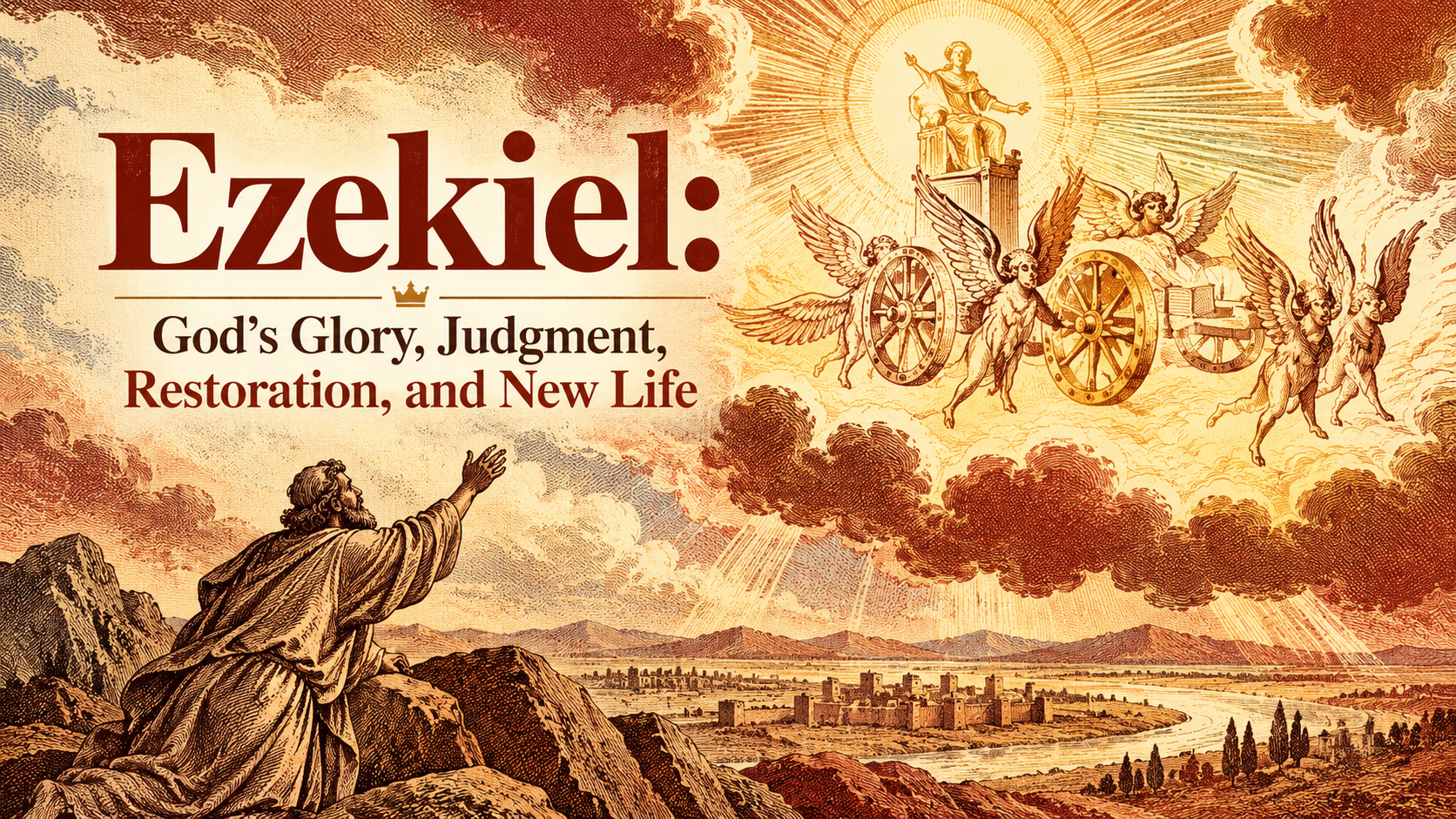
Ezekiel: God's Glory, Judgment, Restoration, and New Life
A 40-lesson study of Ezekiel exploring God's glory and holiness, Jerusalem's judgment, prophetic responsibility, the watchman, new heart and Spirit, the valley of dry bones, restored shepherding, temple vision, and God's returning presence.
Course Description
Ezekiel: God's Glory, Judgment, Restoration, and New Life is a comprehensive 40-lesson study of Ezekiel 1-48. Students follow the prophet from his vision of God's glory in exile through Jerusalem's judgment and the fall of the city to promises of new heart, new Spirit, restored people, renewed worship, life-giving water, and God's abiding presence.
What You Will Learn
Learning Objectives
- Understand Ezekiel's exilic historical setting and the major movements of the book.
- Explain the importance of God's glory, holiness, sovereignty, and presence.
- Understand Ezekiel's watchman calling and teaching on moral responsibility and repentance.
- Examine prophetic symbolism carefully without forcing speculative meanings into the text.
- Trace Ezekiel's condemnation of idolatry, injustice, corrupt leadership, and false security.
- Explain the promises of a new heart, new spirit, God's Spirit, the Davidic shepherd, and national restoration.
- Study the valley of dry bones and Gog passages in their literary context.
- Identify the theological themes of the temple vision, river of life, restored land, and return of God's glory.
- Apply Ezekiel to worship, leadership, repentance, hope, spiritual renewal, and faithful life.
Course Overview
Course Content
Forty substantial self-study lessons cover Ezekiel 1-48, including the throne vision, prophetic call, watchman, symbolic signs, temple idolatry, departure of God's glory, personal responsibility, judgment on Jerusalem and the nations, the restored shepherd, new heart and Spirit, valley of dry bones, Gog of Magog, restored temple, river of life, land distribution, and the final declaration that the Lord is there. Every lesson includes substantial teaching, a plain-text assignment, and four multiple-choice review questions.